I have been a public high school teacher for five years. Throughout those years I tutored students on the side and worked at local science museums to reach even more students. I have a Bachelor's degree in Biology from UNC Chapel Hill and a Master's degree in Biological Sciences from Clemson University. I have been teaching biology and forensics at academic and honors levels.
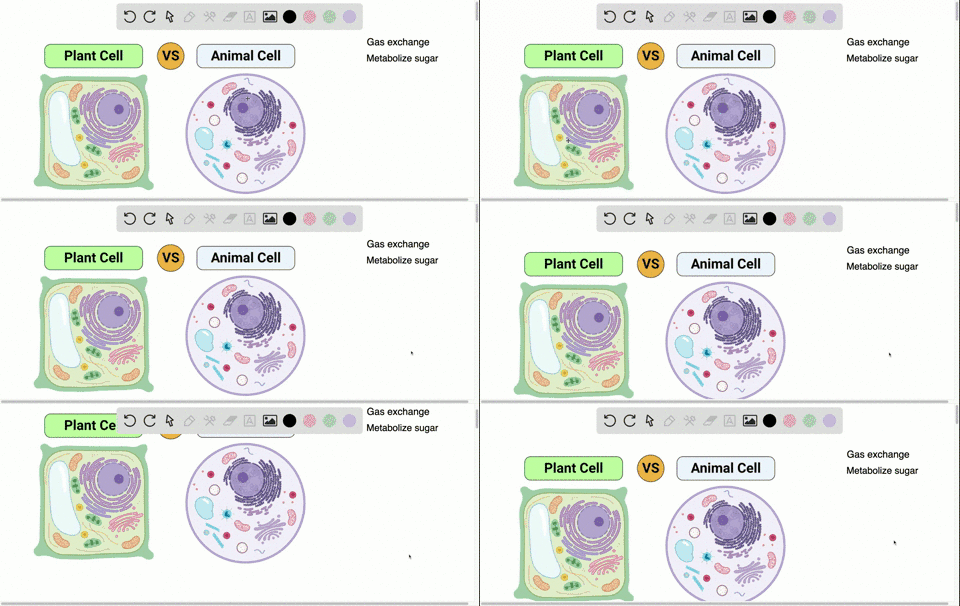
Imagine that you could chgineer a cell that exchanges gases efficiently with the environment and quickly metabolizes sugars. Describe your cell's size and shape. What organelles would be abundant?
How does the cytoskeleton interact with other structures in cukaryotic cells?
How are the members of a homologous pair similar and different?
Where do the members of each pair of homologous chromosomes in a diploid cell come from?
A protein-encoding region of a gene has the following DNA sequence:T T T C A T C A G G A T G C A A C A
Determine how each of the following mutations alters the amino acidsequence:a. Substitution of an A for the $\mathrm{T}$ in the first positionb. Substitution of a G for the $C$ in the 17 th positionc. Insertion of a T between the fourth and fifth DNA basesd. Insertion of a GTA between the 12 th and 13 th DNA basese. Deletion of the first DNA nucleotide
the primary information or code for building proteins in the cells of all organism is contained in the cell’s
In a population of 80 desert bighorn sheep, a mutant recessive allele cc, when homozygous, causes curled coats in both males and females. The normal dominant allele CC produces straight coats. A biologist studying these sheep counts four with curled coats. She also takes blood samples from the population for DNA analysis, which reveals that 19 of the sheep are heterozygous carriers of the cc allele. To increase genetic diversity in this bighorn sheep population, thirty sheep are introduced from a population where the cc allele is absent.
Assuming that random mating occurs between the original and the introduced sheep, and that the cc allele is selectively neutral, what will be the frequency of cc in the next generation?
Recall that the equation for determining the impact of immigration on the gene pool of an existing population is estimated by the following equation:pi' = (1 - m)pi + mpm
where m represents migrants.
Express your answer using two decimal places.
Barb is taking an anti-seizure medication for migraine. She goes to a party where someone offers her Xanax (a Benzodiazepine) and a beer (Alcohol): Why is this so dangerous?Xanax would counter the effects of anti-seizure medicationAIl of these drugs are addictiveAll of these drugs cause psychosisAIl of these drugs are sedative hypnotics
If a country has 1,000,000 people surviving between the ages of 1-6, 200,000 people surviving until the ages of 7-13, 100,000 people surviving until the ages of 14-20, 50,000 survivors between 21-40 years old, 25,000 survivors between 41 and 60, and 5,000 survivors at ages 61-100, what survivorship curve do these data most resemble?Type IIIType IIType IType IV
Which of the following will have identical alleles for all genes?Sister chromatidsHomologous chromosomesDaughter chromosomesAllelesChromosomes