Katherine Kartheiser is a science department faculty member at The Dalton School. After she received her B.A. in biology from Brown University, where she graduated magna cum laude and Phi Beta Kappa, she joined the Teach for America Corps and served as a high school secondary science educator on the South Side of Chicago. She earned her Masters in Teaching from Dominican University during her time in the Corps. Katherine taught Intensive Biology, Biology, Human Physiology and Immunology at The Ethical Culture Fieldston School and currently teaches Biology and Advanced Biology at The Dalton School.
Explain this statement in your own words and give an example.The properties of the substances around us depend on the structure of the particles that compose them.
Calculate the theoretical yield of the product (in moles) for each initial amount of reactants.Ti(s) + 2 Cl2(g)-TiCl4(s)a. 4 mol Ti, 4 mol Cl2 b. 7 mol Ti, 17 mol Cl2c. 12.4 mol Ti, 18.8 mol Cl2
Which is the larger species in each pair?
a. Li or Li+ b. I- or Cs+c. Cr or Cr3+ d. O or O2-
Bacteria perform the following ecological roles. Which role typically does not involve symbiosis?\begin{equation}\begin{array}{ll}{\text { (A) skin commensalist }} & {\text { (C) gut mutualist }} \\ {\text { (B) decomposer }} & {\text { (D) pathogen }}\end{array}\end{equation}
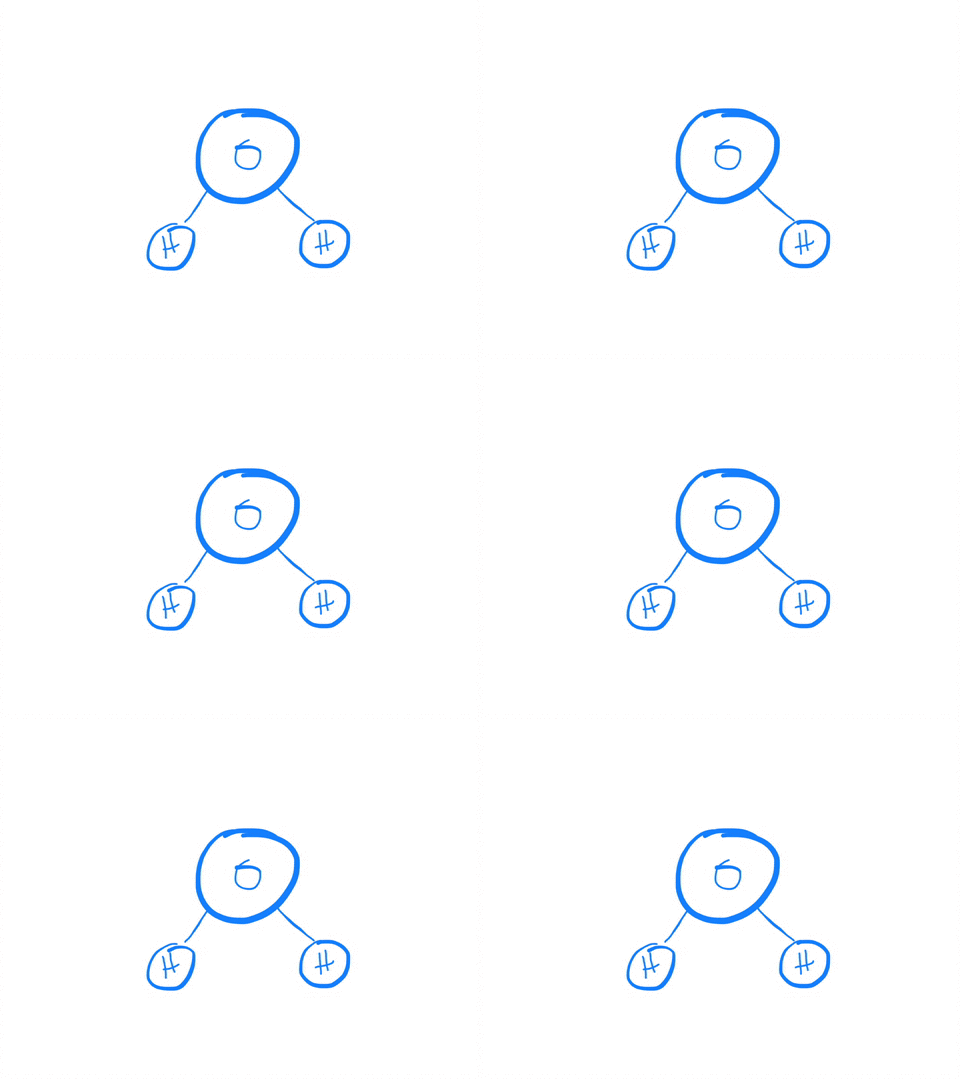
(a) Does the diagram best describe a crystalline solid, a liquid, or a gas? (b) Explain. [Section 11.1$]$
Given below is a processed, mature mRNA sequence corresponding to a short protein:CCAGGAUGACGCUAGCCGCAGCGAGCUAGGAGGAUGAGGGACCUAAAAAAAAAHow many amino acids will the protein translated from this mRNA sequence have?
Reproduction without gamete fusion is:A. Sexual B. Asexual C. Gametogenesis D. Budding E. Parthenogenesis
1.2 Which of these reproduction strategies produce progeny with the most diverse genetic composition?A. Sexual B. Asexual C. Fission D. Budding E. Parthenogenesis
1.3 In humans, female and male gametogenesis is different. Male gametogenesis is:A. Discontinuous and the four meiotic products produce gametesB. Continuous and the four meiotic products produce gametesC. Discontinuous and one meiotic product produces a gameteD. Continuous and one meiotic product produces a gamete
If a solution containing 123.73 g of silver nitrate is allowed to react completely with a solution containing 13.59 g of lithium iodide, how many grams of solid precipitate will be formed?Solid precipitate: ? gHow many grams of the reactant in excess will remain after the reaction?Reactant in excess: ? gAssuming complete precipitation, how many moles of each ion remain in solution? If an ion is no longer in solution, enter a zero (0) for the number of moles.Li+ = ? molI- = ? molAg+ = ? molNO3- = ? mol
A 35.0 mL solution of HBr at an unknown concentration completely reacts with 11.38 mL of a 0.250 M Ba(OH)2 solution.What is the concentration of the HBr solution? Type in a numerical answer below. No units should be entered in this type of Canvas quiz question.2 HBr(aq) + Ba(OH)2(aq) ⟶ 2 H2O(l) + BaBr2(aq)
DNA replication1. Below (left) is a stretch of DNA that you will be replicating. During replication, the two strands separate (below, right) and both are copied base by base.A. Draw/write in the sequence of a newly synthesized strand complementary to each of the original DNA strands. Remember to follow the base-pairing rules. You'll have created 2 hybrid DNA strands.B. What is the purpose for a cell in copying its DNA? Why must it do this before it divides?- The purpose is so each daughter cell gets an equal amount of DNA. It must do this so there are 46 chromosomes, resulting in a lower chance of a mutationC. Under what circumstances would a cell need to replicate itself? List 2 scenarios.
Amphipathic molecules are important in biological systems. A scientist is studying the amphipathic molecule that is the major component of cell membranes. He mixes some of those amphipathic molecules vigorously with water in a test tube, and then allows the test tube to stand, undisturbed, for one hour. When he returns he examines the test tube and documents the location and arrangement of the amphipathic molecules in the water.What is the name of this amphipathic molecule?In the test tube on the side, draw one probable configuration of these amphipathic molecules in water. Make sure to draw the amphipathic molecules accurately.Label the location of the water.Label the amphipathic molecules.Label the regions of the amphipathic molecules.