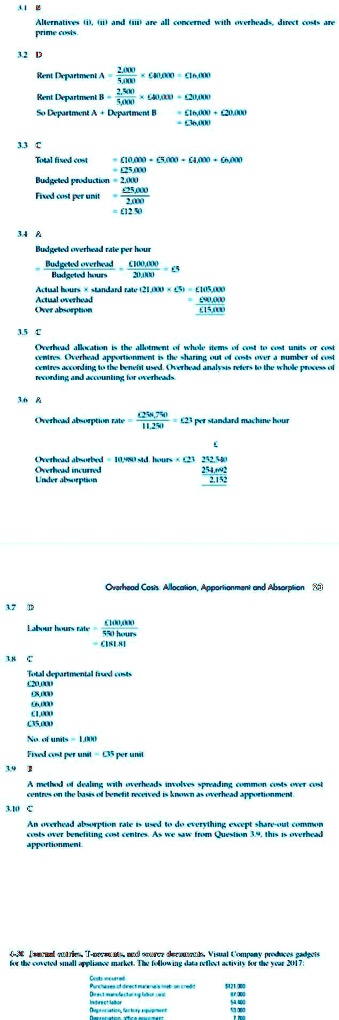
318 Alternatives (i), (ii), and (iii) are all concerned with overheads. Direct costs are prime costs.
32D
2,000 40,000 16,000 2,500 Rent Department B - 0,000 5,000 So Department A + Department B = 16,000 + 20,000 = 36,000
3.3 Total fixed cost
= 10,05,000 4,000 6,000 - 25,000 Budgeted production 2,000 25,000 Fixed cost per unit = 12.50
3.4 Budgeted overhead rate per hour
Budgeted overhead 000,000 = Budgeted hours 20,000
Actual hours standard rate (21,000 5) = 105,000
Actual overhead = 90,000
Other absorption = 15,000
3.5 Overhead allocation is the allotment of whole items of cost to cost units or cost centers. Overhead apportionment is the sharing out of costs over a number of cost centers according to the benefit used. Overhead analysis refers to the whole process of recording and accounting for overheads.
36
258,750 Overhead absorption rate 23 per standard machine hour 11,250
Overhead absorbed - 10,980 std. hours 23 252.5
Overhead incurred = 254,692
Under absorption = 2,152
Overhead CoAllocation, Apportionment, and Absorption
37
100,000 Labor hours rate 550 hours 1881
Total departmental fixed costs
08000 06,000 1,000 35,000 No. of units - Lo Fixed cost per unit 35 per unit
39 A method of dealing with overheads involves spreading common costs over cost centers on the basis of benefit received is known as overhead apportionment.
3.10 An overhead absorption rate is used to do everything except share-out common costs over benefiting cost centers. As we saw from Question 3, this is overhead.
LriTd Vial Company produces and fixes the control small appliance market. The following data reflect activity for the year 2017. Costs incurred: Priced products done $121.00, Dentceg andeeeriebor fuctey equpner.