I have conducted workshops on personality development with the Art of Living organization.
How are compound leaves distinguished from simple leaves?a. Compound leaves do not have axillary buds at the base of leaflets.b. Compound leaves are smaller than simple leaves.c. Simple leaves are usually deciduous.d. Compound leaves are found only on pine trees.e. Simple leaves are found only in gymnosperms.
What type of interaction is it when an alfalfa plant gains fixed nitrogen from the bacterial species Rhizobium in its root system and the Rhizobium gains carbohydrates from the plant?a. mutualismb. parasitismc. commensalismd. competitione. predation
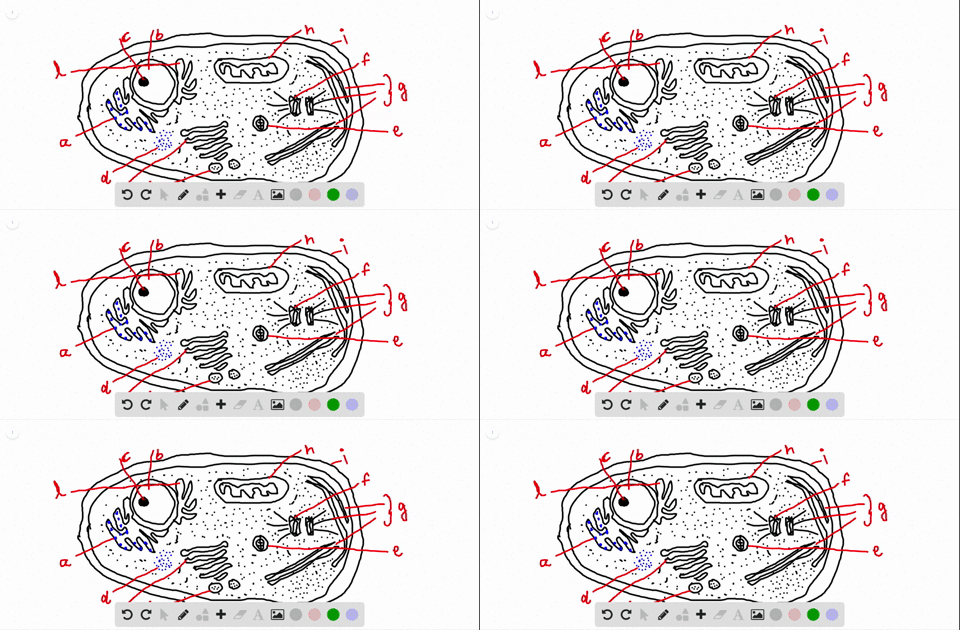
Label the structures in this diagram of an animal cell. Review the functions of each of these organelles.(FIGURE CANNOT COPY)
The ultrastructure of a chloroplast is best studied using aa. light microscope.b. scanning electron microscope.c. transmission electron microscope.d. light microscope and fluorescent dyes.
The cells of an ant and an elephant are, on average, the same small size; an elephant just has more of them. What is the main advantage of small cell size? (Explain your reasoning.)a. A small cell has a larger plasma membrane surface area than does a large cell.b. Small cells can better take up sufficient nutrients and oxygen to service their cell volume.c. It takes less energy to make an organism out of small cells.d. Small cells require less oxygen than do large cells.
Which of the following clues would tell you whether a cell is prokaryotic or eukaryotic?a. the presence or absence of a rigid cell wallb. whether or not the cell is partitioned by internal membranesc. the presence or absence of ribosomesd. Both b and c are important clues.