Texts: 1.
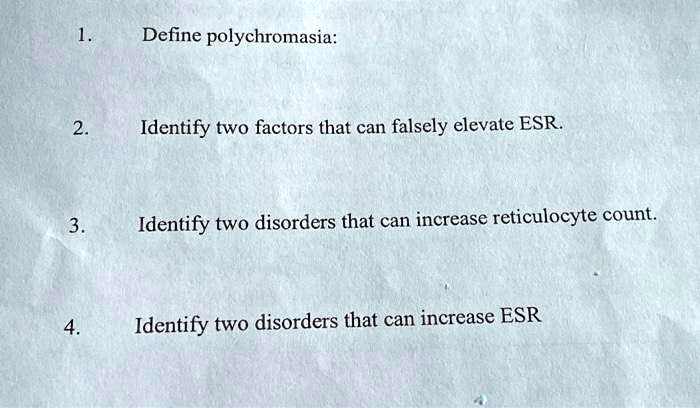
Define polychromasia:
Polychromasia is a term used in hematology to describe the presence of multiple colors in stained blood cells. It refers to the variation in color intensity observed in red blood cells when stained with certain dyes. This variation is indicative of the presence of immature red blood cells, known as reticulocytes, in the blood.
2.
Identify two factors that can falsely elevate ESR.
There are several factors that can falsely elevate the erythrocyte sedimentation rate (ESR). Two common factors include:
- Inflammation: Any condition that causes inflammation in the body, such as infection, autoimmune diseases, or tissue damage, can lead to an elevated ESR.
- Pregnancy: During pregnancy, the ESR tends to be higher due to changes in blood composition and increased levels of certain proteins.
3.
Identify two disorders that can increase reticulocyte count.
An increased reticulocyte count, also known as reticulocytosis, can be seen in various disorders. Two examples include:
- Hemolytic anemia: This is a condition characterized by the premature destruction of red blood cells. In response, the bone marrow increases its production of reticulocytes to compensate for the loss.
- Blood loss: When there is significant blood loss, the body tries to replenish the red blood cell count by releasing more reticulocytes into circulation.
4.
Identify two disorders that can increase ESR.
An elevated ESR can be seen in several disorders. Two examples include:
- Infection: Inflammatory responses triggered by infections can cause an increase in ESR. This can be seen in conditions such as pneumonia, urinary tract infections, or tuberculosis.
- Rheumatoid arthritis: This autoimmune disease leads to chronic inflammation, which can result in an elevated ESR. Other autoimmune diseases can also cause a similar effect.