I have an MS in physics, currently going to community college classes to learn data science and computer science to gain a bit more of practical experience. I've had a shaky start in physics so I know how valuable it can be when you explain things the RIGHT way.
Evaluate the iterated integral.
$ \displaystyle \int_0^1 \int_0^y xe^{y^3}\ dx dy $
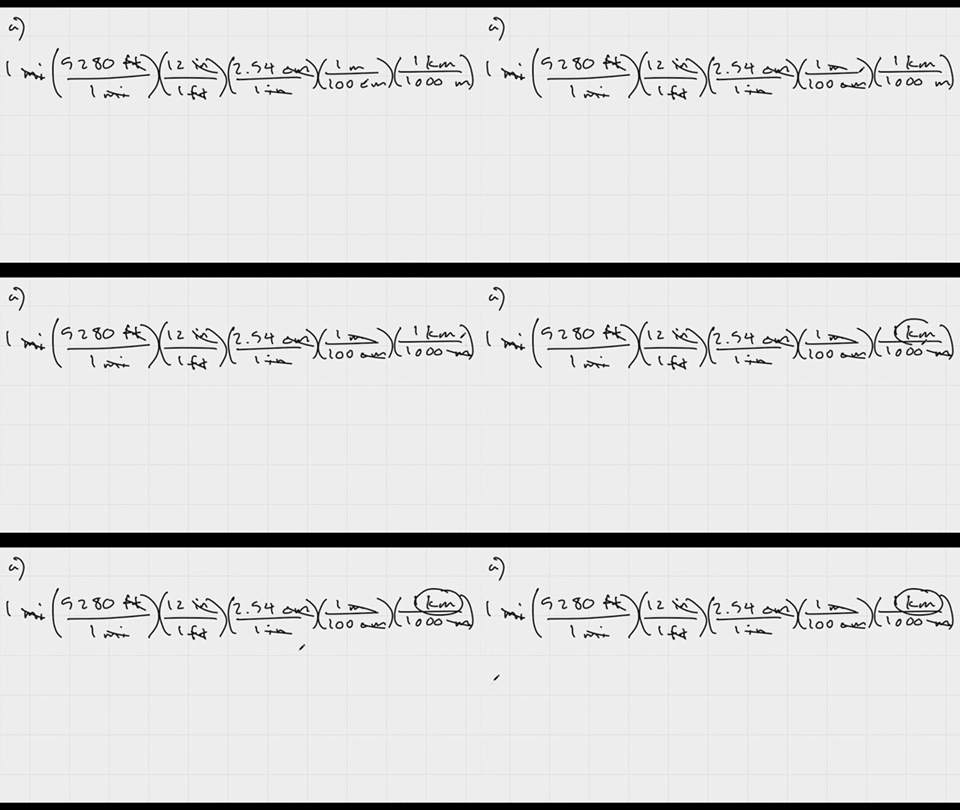
Starting with the definition 1 in. = 2.54 cm, find the number of (a) kilometers in 1.00 mile and (b) feet in 1.00 km.
(I) What force is needed to accelerate a sled (mass = 55 kg) at 1.4 m/s$^2$ on horizontal frictionless ice?
(II) Add (9.2 $\times$ 10$^3$s) + (8.3 $\times$ 10$^4$s) + (0.008 $\times$ 10$^6$s).
(I) How many electrons make up a charge of -48.0$\mu$C?
A wire carries a steady current of 1.1 A. A straight section ofthe wire is 0.99 m long and lies along the y-axis within a uniformfield B = 1.19 T in the z-direction. What is magnitude of themagnetic force on the section of wire in N.
A constant force F = 2.0 N i + 5.0 N j acts on a 5.00 kg object as it moves in a straight line from the position r1 = 1.0 m i + 1.0 m j to a position r2 = 6.0 m i + 2.0 m j. Determine the work (in J) done by the force during this motion.
During the 1980s, a typical computer hard disk had a rotational speed of 3,600 rpm (revolutions per minute). Express this answer in radians/sec and degrees/sec.On an interstate highway, you are traveling at 30 m/sec. The diameter of the wheels is 50 cm. How fast are the wheels rotating in revolutions/sec?On your vacation, you visited several casinos in Las Vegas, and in one of them, you stopped by a roulette table. You observed that the roulette wheel takes about 40 seconds to come to a stop, and it completed 30 revolutions in this time. How fast was it rotating at the very beginning before starting to slow down?
Let's model a skater spinning on a frictionless, icy surface as a spinning disk. Let the disk have a 0.6 m radius and a mass of 50 kg spinning at a rate of 2 revolutions per second.What is the moment of inertia of this model?What is the angular momentum of this model?What is the rotational kinetic energy of this model?
Question 2:Now, the skater pulls the arms in. Let me model this as having the radius of the disk decrease. Let it decrease from 0.6 m to 0.5 m. The mass remains the same.What is the moment of inertia of this model after the arms are pulled in?What is the angular velocity after the arms are pulled in?What is the rotational kinetic energy of this model after the arms are pulled in?What is the change in the rotational kinetic energy of this model after the arms are pulled in?
On long downhill sections of freeways, there are runaway truck lanes that go off the road and up a steep hill, giving a truck a place to stop if its brakes have failed. Say a runaway truck lane has a ramp that heads uphill at 30° to the horizontal. If a 15,600 kg truck goes out of control and enters the lane going 111 km/h, how far along the ramp does it go? Neglect friction. Note: This answer is unrealistic; real runaway truck lanes are made with loose sand to make friction as large as possible, so the lane need not be nearly as long as you have calculated.
A sample of radioactive material decayed to half of its originalamount in 3 years. How long did it take to decayto 45 of its original amount? (Give an answer accurate to3 decimal places.)